Gyeongju offers one of the most distinctive travel experiences in Korea, where the history of Silla's thousand-year capital (57 BC – AD 935) meets today's trends. Bulguksa, Seokguram, Cheomseongdae and Donggung Palace and Wolji Pond all sit within the Gyeongju Historic Areas, a UNESCO World Cultural Heritage site that spans the city, while the hanok cafés and hanbok rentals of Hwangnidan-gil draw younger travelers. Singyeongju KTX Station is 2 hours 30 minutes from Seoul and 35 minutes from Busan.
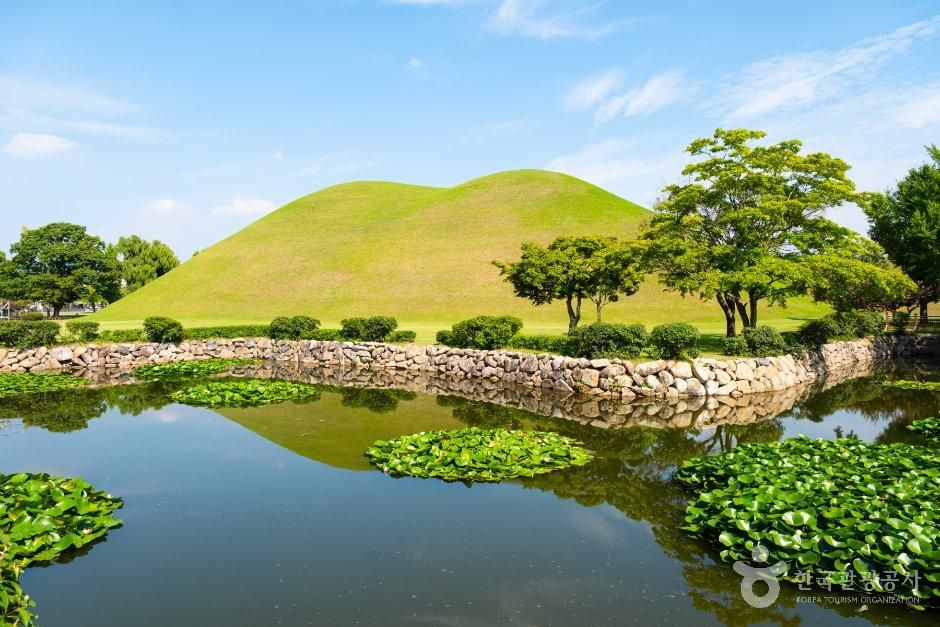
Gyeongju's greatest charm is that the whole city is a museum. Silla remains have been unearthed even during highway construction, halting the work, because thousands of years of history lie layer upon layer underground. Walk through Daereungwon (23 Silla royal tombs) and the world of royals from 1,400 years ago unfolds before you.
Spring and autumn are the best times to visit, with cherry blossoms peaking in April (Bomun Lake, Bulguksa, Hwangseong Park) and autumn leaves in October (Bulguksa, Namsan).

Gyeongju at a glance
| Item | Details |
|---|---|
| Seoul → Gyeongju | 2 hours 30 minutes to Singyeongju KTX Station / Busan → Singyeongju 35 minutes |
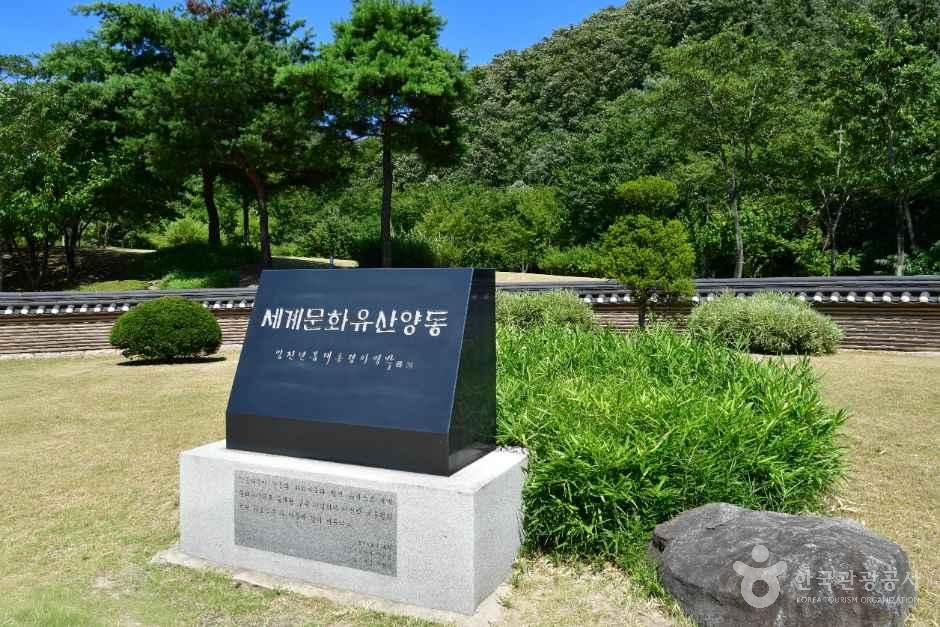
| UNESCO heritage | Bulguksa, Seokguram, Gyeongju Historic Areas, Yangdong Village |
| Suggested length | Day trip (highlights) / 2 days 1 night (relaxed) / 3 days 2 nights (in depth) |
| Best seasons | April cherry blossoms (Bomun Lake, Bulguksa) / October autumn leaves and night views |
| Getting around | City buses, taxis, bicycles. A rental car is convenient |
Bulguksa and Seokguram: UNESCO World Cultural Heritage
Bulguksa Temple is the signature temple of Silla, completed under King Gyeongdeok (751). Enter the temple via Cheongungyo and Baegungyo bridges (National Treasure No. 23) and you will find Dabotap Pagoda (National Treasure No. 20) and Seokgatap Pagoda (National Treasure No. 21) facing each other in the courtyard in front of the main hall. Admission is ₩6,000 for adults. In cherry blossom season, the blossoms and ancient pagodas together are breathtaking.
Seokguram Grotto sits near the top of Tohamsan (565 m above sea level), above Bulguksa, and holds a Buddha carved from granite. The serene smile and balanced proportions of the main Buddha (360 cm) are the high point of Silla sculpture. Admission is ₩6,000 for adults. It is 10 minutes by bus from Bulguksa, or a 3 km walk (40 minutes).
Cheomseongdae and Donggung Palace and Wolji Pond: Gyeongju by night
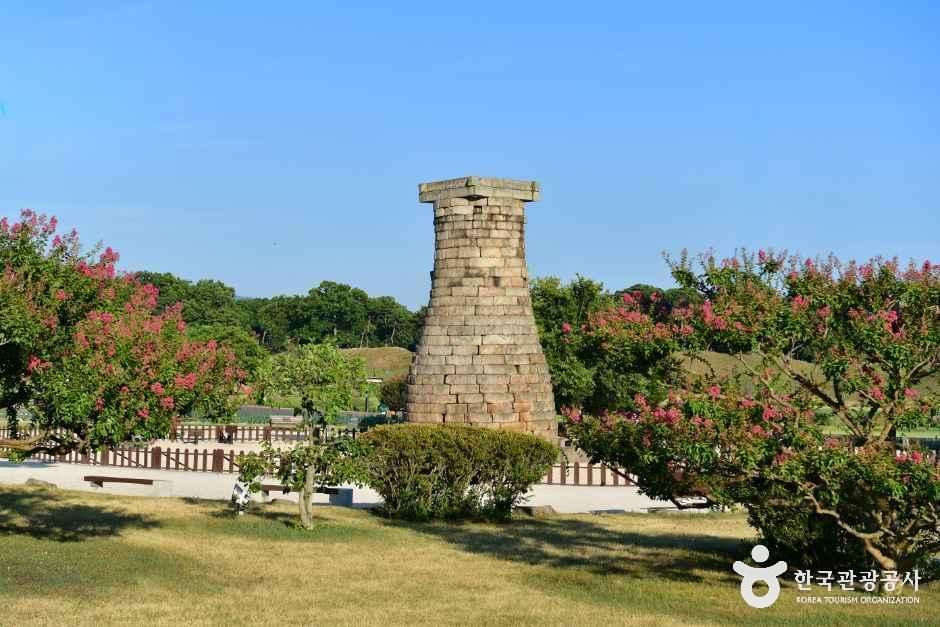
Cheomseongdae, built in 647 under Queen Seondeok of Silla, is the oldest astronomical observatory in East Asia. At 9.17 m including the base it looks small, but it carries great historical meaning, as time is said to have been measured with it at the summer and winter solstices. The cherry blossom walk around it peaks in April.
Donggung Palace and Wolji Pond (Anapji) was a pond attached to the Silla royal palace and is the best night-view spot in Gyeongju. When the lights come on after 7 p.m., the pavilions reflected in the pond create a magical atmosphere. Admission is ₩3,000 for adults. This night view is the number-one reason to stay a night in Gyeongju.
Daereungwon and Hwangnidan-gil: royal tombs and trends
Daereungwon is a royal tomb park with 23 tombs of Silla kings and nobles. Inside, Cheonmachong (where the Heavenly Horse painting, a National Treasure, was found) is open, so you can see the inside of a Silla tomb for yourself. Admission is ₩3,000 for adults. In cherry blossom season, the paths between the royal tombs are stunning.
Hwangnidan-gil is the alley east of Daereungwon, lined with cafés, restaurants and workshops in converted old hanok. Renting a hanbok (₩15,000–25,000 per day) and doing a photo loop of Hwangnidan-gil, Cheomseongdae and Daereungwon is the classic way younger Koreans see Gyeongju.
Gyeongju food: tastes of the thousand-year capital
| Food | Where to try it | Price range |
|---|---|---|
| Hwangnam-ppang (red bean pastry) | Hwangnam Bread Park Jae-seo main store (started in 1898) | ₩8,000 for 10 |
| Gyori gimbap | Gyori Gimbap (near Hwangnidan-gil, a famous spot with lines) | From ₩4,500 per roll |
| Hanjeongsik (Korean set meal) | Yoseokgung, Hyangturi, Gyeongju Beopju | ₩30,000–50,000 per person |
| Ssambap and bibimbap | Korean restaurants on Hwangnidan-gil | ₩10,000–15,000 per person |
| Gyeongju-ppang and chalbori-ppang (barley pancakes) | Gyeongju Station and bakeries downtown | ₩1,000–1,500 each |
Gyeongju travel budget
| Trip type | Total cost per person |
|---|---|
| Day trip from Seoul by KTX | About ₩100,000–180,000 (KTX round trip + meals + admission) |
| 2 days 1 night with a hanok stay | About ₩250,000–500,000 (KTX + 1 night in a hanok + meals + hanbok) |
| 3 days 2 nights, 5-star hotel, family of 4 | ₩800,000–2,500,000 in total (e.g. Lahan Select) |
Gyeongju FAQ
What is a good 2-day route in Gyeongju?
Day 1: Bulguksa and Seokguram in the morning → lunch on Hwangnidan-gil with a hanbok and Gyori gimbap → Cheomseongdae and Daereungwon in the afternoon → Donggung Palace and Wolji Pond at night. Day 2: a walk around Bomun Lake in the Bomun Tourist Complex → Gyeongju National Museum → head home. Both days are full and rewarding.
When and where are the cherry blossoms best?
Gyeongju’s cherry blossoms peak in the first and second weeks of April. Bomun Lake (a 6 km lakeside path), the entrance to Bulguksa, Hwangseong Park and the main roads downtown are the best spots. Book accommodation 2–3 months ahead for this period.
Where can I rent a hanbok?
There are many hanbok rental shops on Hwangnidan-gil and near the entrance to Daereungwon, at ₩15,000–25,000 per day. Wearing a hanbok gets you free admission to Bulguksa, Daereungwon and Donggung Palace and Wolji Pond. For photos, an evening rental (8 hours) is recommended.
Do I need a rental car in Gyeongju?
The main sights downtown (Hwangnidan-gil, Cheomseongdae, Daereungwon, Donggung Palace and Wolji Pond) can be reached on foot, by bicycle or by taxi. Bulguksa and Seokguram can be reached by city bus (No. 10, 100, 108) or taxi (about ₩10,000 one way). If you plan to explore the wider area (Yangdong Village, Oksan Seowon), a rental car is convenient.
Is the Gyeongju National Museum free?
Admission to the permanent exhibition halls (Silla History Gallery, Silla Art Gallery, Wolji Gallery) is free. Special exhibitions may charge a fee. Visiting on your last day is a good way to tie together the artifacts you saw at the historic sites.
Sources
- Gyeongju City tourism information · Gyeongju City · accessed 2026-05-04
- Korea Tourism Organization: Gyeongju · Korea Tourism Organization · accessed 2026-05-04
- UNESCO World Heritage: Gyeongju Historic Areas · UNESCO · accessed 2026-05-04
Information was checked against the official sources listed above. Opening hours, fees and fares can change; please confirm with the venue or operator before you visit.