
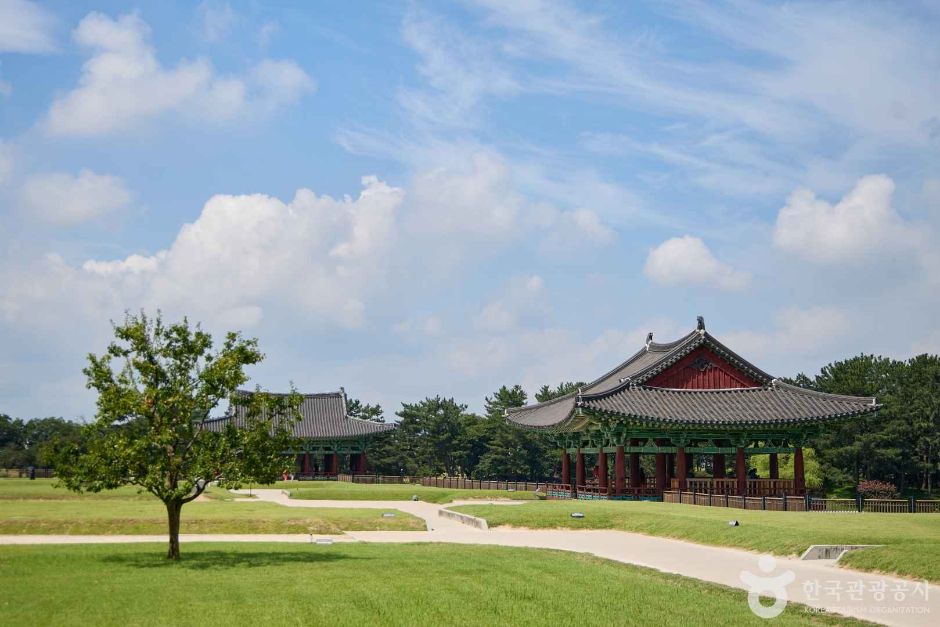
Donggung Palace and Wolji Pond is the site of the pond of Donggung, the palace where the Silla crown prince lived, and it stays open late in Gyeongju, making it good for the evening. Adults pay 3,000 won, and it opens 9:00 to 22:00. According to the Korea Tourism Organization, it was a detached palace for banquets on happy national occasions or to welcome honoured guests; after Silla fell it was called Anapji, from a poem about only wild geese and ducks flying in, and in 2011 it took its present name. Last entry is 21:30, parking is free and it is open every day of the year.
- Location: 102 Wonhwa-ro, Gyeongju, Gyeongsangbuk-do
- Admission: Adults 3,000 won; military and youth 2,000 won; children (7 to 12) 1,000 won
- Hours: 9:00 to 22:00 (last entry 21:30)
- Closed: Open all year
- Parking: Free
- Inquiries: +82-54-750-8655
What is it, and why did the name change?
It is the site of a detached palace of the Silla royal palace, used with its buildings as Donggung, the crown prince's residence, and for banquets on national celebrations or for honoured guests. After Silla fell, wild geese (an) and ducks (ap) flew in and it became Anapji; in 2011 it was renamed Gyeongju Donggung Palace and Wolji Pond. The commentary says Wolji means "pond reflecting the moon"; when it fell into ruin through Goryeo and Joseon, poets lamented that the splendid palace was gone and only geese and ducks came, fixing the name Anapji. It lies east of Wolseong.
Admission and hours
| Category | Individual | Group |
|---|---|---|
| Adults | 3,000 won | 2,400 won |
| Military and youth | 2,000 won | 1,600 won |
| Children (7 to 12) | 1,000 won | 800 won |
Parking is free and there are toilets. Because it is open late, see Daereungwon and Cheomseongdae by day and come here in the evening; see the Gyeongju guide for the rest.
How was the pond designed to look so large?
The commentary explains it through landscaping principles. The west edge is straight and the east edge sharply curved; alternating open straight spaces and closed curved ones makes the space look larger than it is. The west edge is also more than twice as high as the east, so looking east from the west feels like looking down on the sea, and from nowhere can you see the whole pond. The bed was laid with gravel, and square wooden boxes were set in for lotuses so they would not fill the pond and make it look small. The commentary also suggests Goguryeo and Baekje craftsmen joined the work after unification.
How did water flow in and out?
Water was drawn from a stream to the north-east through an inlet with two stone basins, one above the other, that look as if carved with turtles, filtering out gravel and sand. Flat stones where the water fell prevented erosion and murky water, and a small artificial island near the inlet slowed the flow so water circulated naturally. The outlet opposite has three holes in a vertical line fitted with wooden stoppers to control the level: pulled out in heavy rain, kept in during drought. Wooden stoppers and an oar from the pond bed are on display.
Which finds stand out?
In 1975, excavators found the juryeonggu in the mud of the pond bed: a 14-sided oak die the size of a child's fist, each face carved with a forfeit. The commentary lists drinking-game forfeits such as downing three cups at once, drinking with arms crossed, dancing without a sound and laughing loudly after a drink. The excavation confirmed 26 building sites; three buildings have been restored. Pottery inscribed to the Dragon King suggests a building for rites to him.
Wolji Hall displays a wooden boat found upside down in the mud; waterlogged and soft, it was dismantled piece by piece, wrapped in wet cloth and lifted, then spent nine years in chemicals for display. The commentary stresses that these finds were used in daily life, unlike grave goods. Animal bones include not only cattle and pigs but roe deer, wild goats, boar, pheasants, ducks and geese, which the commentary introduces under the title "Silla had a zoo too".
- Last entry is 21:30, so plan your evening.
- Plan your order with Daereungwon or Cheomseongdae.
- Allow time for both the Wolji Hall exhibition and the outdoor pond.
- Check the age groups for military, youth and child tickets.
Who is it for?
- Evening walkers: open until 22:00.
- Garden and architecture fans: landscaping and the inlet explained in detail.
- Families: the dice forfeits and the boat are fun stories.
- Gyeongju walkers: Cheomseongdae and Daereungwon are close by.
FAQ
How much is admission?
Individual adults 3,000 won, military and youth 2,000 won, children (7 to 12) 1,000 won.
What time is last entry?
It opens 9:00 to 22:00 with last entry at 21:30, every day.
Is parking free?
Yes, parking is listed as free.
Why did Anapji become Donggung Palace and Wolji Pond?
It was renamed Gyeongju Donggung Palace and Wolji Pond in 2011, according to the Korea Tourism Organization.
Sources
- Korean-language tourist information (Gyeongju Donggung Palace and Wolji Pond, hours, admission) · Korea Tourism Organization TourAPI · accessed 2026-10-23
- Tourism storytelling commentary (Anapji, juryeonggu, inlet, Wolji Hall exhibition) · Korea Tourism Organization storytelling database · accessed 2026-10-23
Fees, hours and programmes can change, so check the latest information before you visit.
Information was checked against the official sources listed above. Opening hours, fees and fares can change; please confirm with the venue or operator before you visit.