
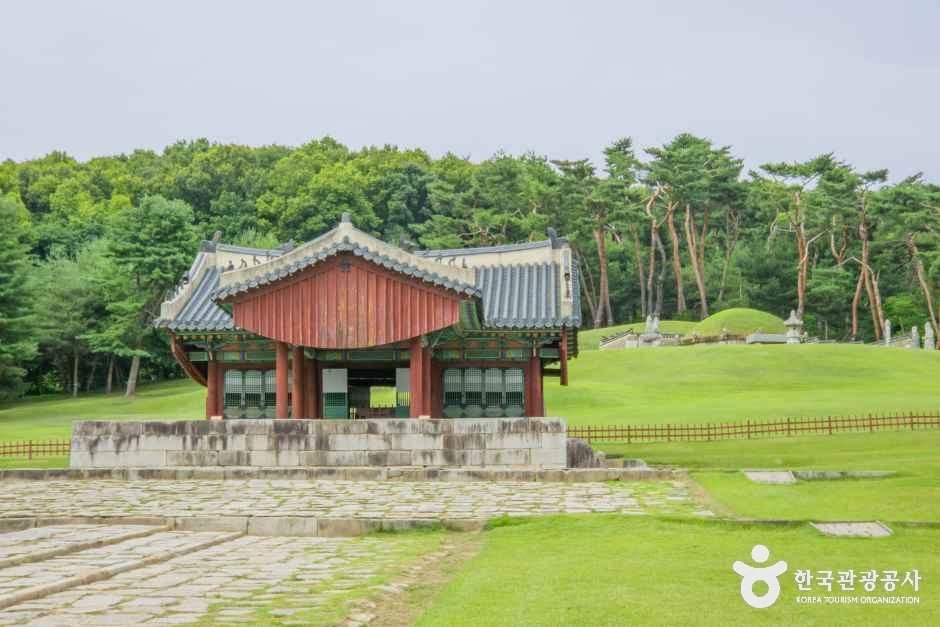
Yunggeolleung in Hwaseong, Gyeonggi-do, is the joint name for Yungneung, the tomb of the posthumous Emperor Jangjo and Empress Heongyeong, and Geolleung, the tomb of King Jeongjo and Empress Hyoui. The Korea Tourism Organization says Yungneung is a joint tomb with emperor and empress under one mound. Admission is 1,000 won (groups 800 won) and parking is free. It is closed on Mondays, and entry ends an hour before the seasonal closing time. The commentary tells of Crown Prince Sado, who died locked in a rice chest, and of Jeongjo, who moved his father's tomb to Hwaseong, which he meant to make a new capital. There are toilets; inquiries on +82-31-222-0142.
- Location: 21 Hyohaeng-ro 481beon-gil, Hwaseong, Gyeonggi-do (Annyeong-dong)
- Admission: Individual 1,000 won; groups (10+) 800 won
- Closed: Mondays (open if a public holiday, then closed the next weekday)
- Hours: February to May 9:00 to 18:00; June to August 9:00 to 18:30; September to October 9:00 to 18:00; November to January 9:00 to 17:30
- Parking: Available, free
- Facilities: Toilets
- Inquiries: +82-31-222-0142
What is Yunggeolleung?
When Crown Prince Sado died locked in a rice chest on King Yeongjo's orders in 1762, his grave was made on Baebongsan in today's Dongdaemun-gu, Seoul, and called Sueunmyo. After Jeongjo took the throne in 1776, he gave his father the title Crown Prince Jangheon and raised the grave to a won, Yeonguwon; in 1789 he moved it to its present site on Hwasan in Suwon and renamed it Hyeollyungwon. Empress Heongyeong (Lady Hyegyeong) died in 1815 and was buried with him the next year; after the Korean Empire was proclaimed in 1899, Jangheon was posthumously made Emperor Jangjo and the tomb became Yungneung. Geolleung is the tomb of Jeongjo, the 22nd Joseon king, and Empress Hyoui, placed beside his father as he wished.
| Year | Name and location of Yungneung (Korea Tourism Organization data) |
|---|---|
| 1762 | Grave on Baebongsan, called Sueunmyo |
| 1776 | Raised to a won as Yeonguwon after Jeongjo’s accession |
| 1789 | Moved to Hwasan, Suwon, renamed Hyeollyungwon |
| 1816 | Empress Heongyeong buried with him |
| 1899 | Made Emperor Jangjo; tomb raised to Yungneung |
How is Crown Prince Sado’s story told?
Sado was the son King Yeongjo had in his forties with the royal concubine Yeongbin of the Yi clan. Two views of his death still compete: one, following Lady Hyegyeong's memoir Hanjungnok, is that under Yeongjo's pressure and tense palace relations he suffered mental illness and was condemned; the other is that he hoped to reform the politics of Yeongjo's reign and was killed at the instigation of political factions. The commentary says it cannot know which is true, only that his death became a pretext to obstruct Jeongjo's succession. Jeongjo made restoring his father's honour his life's wish, moving the tomb to Hwaseong with the highest rites, but could not make him king in his own reign; that came under King Gojong.
Why did Jeongjo travel to Hwaseong?
The commentary says that after moving his father's tomb, Jeongjo aimed to build a new Joseon from here, and Hwaseong was the result: in eight months he directed construction of 5.5 km of walls and a temporary palace, and the year after completion proposed a plan for every household to prosper and every person to live happily. For his mother Lady Hyegyeong's 60th birthday banquet, he made an eight-day round trip from Changdeokgung to Hwaseong with ten thousand people. The Geolleung commentary presents him as a reforming king who founded Gyujanggak, pursued a policy of impartiality and ran the Jangyongyeong royal guard; he died suddenly at 49 with reforms unfinished. His procession painting links to the Jeongjo Royal Procession mural at Cheonggye Plaza in Seoul; for the same royal-tomb route see Donggureung and Seooreung.
- Check Monday closures and the public-holiday rule.
- Plan your arrival from the last entry time.
- Confirm on site that parking is still free.
- Plan your Gyeonggi itinerary with the Gyeonggi guide.
Who is it for?
- History learners: Sado’s tragedy and Jeongjo’s filial devotion on one site.
- Hwaseong itineraries: link it with the story of the fortress Jeongjo built.
- Family outings: free parking and low admission.
- Tomb comparisons: a joint tomb and a separate tomb side by side.
FAQ
How much is admission?
Individual 1,000 won, groups of 10+ 800 won; parking is free.
When is it closed?
Every Monday. If Monday is a public holiday, it opens and closes the next weekday.
Whose tombs are they?
Yungneung is the tomb of Jangjo (Crown Prince Sado) and Empress Heongyeong; Geolleung of King Jeongjo and Empress Hyoui.
Was Yungneung always here?
No. It was first on Baebongsan and moved to its present site on Hwasan, Suwon, in 1789.
Sources
- Korean-language tourist information (Yungneung and Geolleung overview, visitor information, admission) · Korea Tourism Organization TourAPI · accessed 2026-10-23
- Tourism storytelling commentary (Yungneung and Crown Prince Sado, Geolleung and Jeongjo’s Hwaseong procession) · Korea Tourism Organization storytelling database · accessed 2026-10-23
Fees, hours and programmes can change, so check the latest information before you visit.
Information was checked against the official sources listed above. Opening hours, fees and fares can change; please confirm with the venue or operator before you visit.