
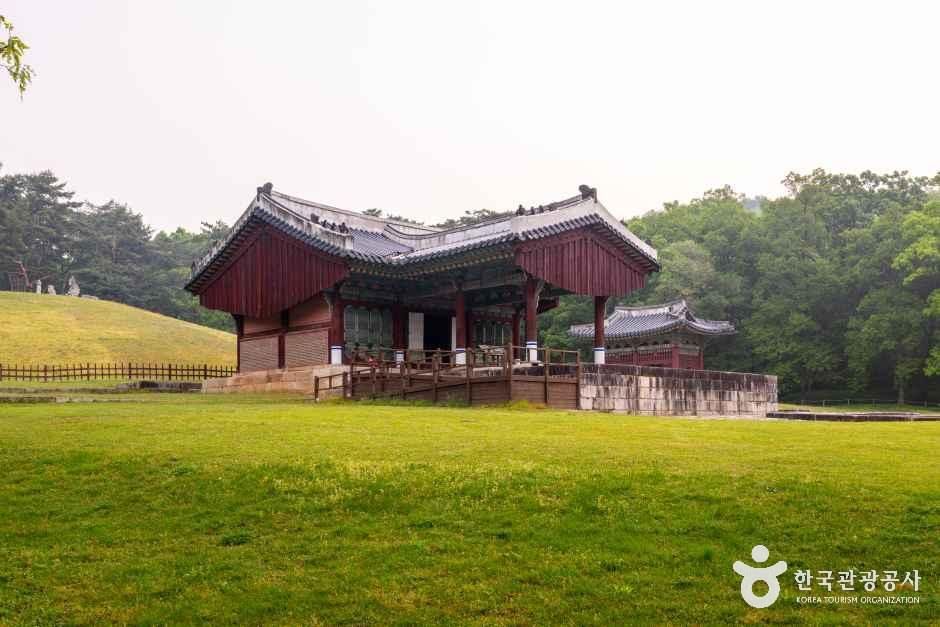
Donggureung in Guri, Gyeonggi-do, is the largest group of Joseon royal tombs; the name means "nine tombs to the east". The Korea Tourism Organization says seven kings and ten queens rest here over about 450 years, beginning with Geonwolleung of King Taejo, followed by Hyeolleung of King Munjong, Mongneung of King Seonjo, Wolleung of King Yeongjo and others. Admission is 1,000 won (groups 800 won), and it is closed on Mondays. Hours vary by season, with last entry an hour before closing. The commentary presents it as the place to see royal tomb styles from early to late Joseon.
- Location: 197 Donggureung-ro, Guri, Gyeonggi-do (Inchang-dong)
- Admission: Individual 1,000 won; groups (10+) 800 won
- Closed: Mondays (open if a public holiday, then closed the next non-holiday)
- Hours: February to May 6:00 to 18:00; June to August 6:00 to 18:30; September to October 6:00 to 18:00; November to January 6:30 to 17:30
- Last entry: One hour before closing
- Parking: Available
- Inquiries: +82-31-579-4900
What is Donggureung?
Geonwolleung of King Taejo came first, in 1408, followed by Hyeolleung (Munjong), Mongneung (Seonjo), Sungneung (Hyeonjong), Hwireung (Queen Jangnyeol), Hyereung (Queen Danui), Wolleung (Yeongjo) and Gyeongneung (Heonjong). With each new tomb it was called Dongoreung (five tombs), Dongchilleung (seven) and so on, until Sureung of King Munjo was moved here and it became Donggureung. It brings together single tombs, twin tombs and tombs on separate mounds sharing one shrine. The commentary begins at the Donggureung culture centre and notes that nine of the World Heritage-listed Joseon royal tombs are here; figures in the commentary date from when it was written, so check the latest on site.
| Tomb | Occupants | Story in the commentary |
|---|---|---|
| Geonwolleung | King Taejo | Highest site, two-character name, silver grass |
| Hyeolleung | King Munjong, Queen Hyeondeok | Separate mounds; the ordeal of Queen Hyeondeok’s tomb |
| Mongneung | King Seonjo, Queens Uiin and Inmok | Three mounds; burial mound open to view |
| Sungneung | King Hyeonjong, Queen Myeongseong | A king born abroad |
| Hwireung | Queen Jangnyeol | The mourning-dress controversy |
| Hyereung | Queen Danui | Built in the form of a won, not a royal tomb |
| Wolleung | King Yeongjo, Queen Jeongsun | Twin tomb, simple structure |
| Gyeongneung | King Heonjong and two queens | Three tombs side by side |
| Sureung | King Munjo, Queen Sinjeong | Made king posthumously |
What is Geonwolleung?
The tomb of King Taejo, Yi Seong-gye, sits on the highest ground of the nine, symbolising the founder's authority. Named Geonwon for the king who founded the nation, it is the only Joseon royal tomb with a two-character name, and it was modelled on the tombs of King Gongmin of Goryeo and Princess Noguk. The commentary says Taejo wished to be buried beside Queen Sindeok at Jeongneung, but his son Taejong chose this site, a story tied to the Strife of Princes. Parts of the commentary are dramatised and should be distinguished from fact.
Hyeolleung, Mongneung and Sureung
Hyeolleung holds King Munjong and Queen Hyeondeok on two separate mounds. Munjong wanted to be buried beside his father Sejong at Yeongneung, but water and rock were found when the site was dug. After her son Danjong was deposed, Queen Hyeondeok's tomb was dug up on King Sejo's orders, according to the commentary. Mongneung has King Seonjo and Queens Uiin and Inmok on three mounds and is described as the only tomb at Donggureung whose burial mound is open to view; its flower-patterned screen stones and stone lantern first appear here. Sureung looks like a single tomb but is a joint burial: Crown Prince Hyomyeong, who died young, was elevated to king under his son Heonjong and buried here. For royal tombs in Seoul, see Seonjeongneung and Heoninneung; for more in Gyeonggi, Seooreung.
- Check Monday closures and the public-holiday rule.
- Plan your arrival from the last entry time.
- The grounds are large, so plan walking time.
- Ask about Mongneung burial-mound viewing times on +82-31-579-4900.
Who is it for?
- Tomb-style comparisons: single, twin and separate-mound tombs in one place.
- History stories: royal tales of Geonwolleung, Hyeolleung and Mongneung.
- Forest walks: a large wooded site.
- Family outings: 1,000 won admission and parking.
See the Gyeonggi guide for more.
FAQ
How much is admission?
Individual 1,000 won; groups of 10 or more 800 won.
When is it closed?
Every Monday. If the regular closing day falls on a public or substitute holiday, it opens and closes the next non-holiday.
How many tombs are there?
Nine: Geonwolleung, Hyeolleung, Mongneung, Sungneung, Hwireung, Hyereung, Wolleung, Gyeongneung and Sureung.
Is there parking?
Yes, according to the Korea Tourism Organization.
Sources
- Korean-language tourist information (Donggureung overview, visitor information, admission) · Korea Tourism Organization TourAPI · accessed 2026-10-23
- Tourism storytelling commentary (Donggureung tomb-by-tomb stories) · Korea Tourism Organization storytelling database · accessed 2026-10-23
Fees, hours and programmes can change, so check the latest information before you visit.
Information was checked against the official sources listed above. Opening hours, fees and fares can change; please confirm with the venue or operator before you visit.