
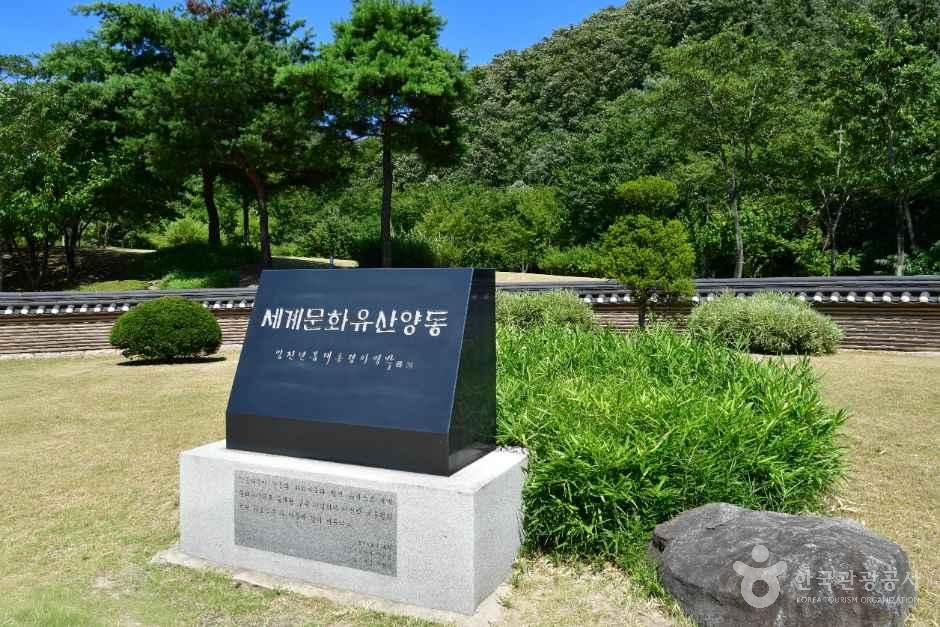
Yangdong Village is Korea's largest clan village, formed by the Wolseong Son and Yeogang Yi families, and for 4,000 won (adults) you can walk through a village of Joseon-era houses. The whole village is a National Folklore Cultural Heritage, and in 2010 it was inscribed with Hahoe Village in Andong as one of the Historic Villages of Korea. It opens 9:00 to 19:00 from April to September and 9:00 to 18:00 from October to March, with last entry an hour before closing. Many houses are lived in, so you cannot enter without the owner's permission, and at designated Treasure and Important Folklore houses only the outer areas, not the inner quarters, are open. Guiding runs from 10:00 to 16:00.
- Location: 93 Yangdongmaeul-gil, Gangdong-myeon, Gyeongju, Gyeongsangbuk-do
- Admission: Adults 4,000 won; youth and military 2,000 won; children 1,500 won
- Hours: April to September 9:00 to 19:00 (last entry 18:00); October to March 9:00 to 18:00 (last entry 17:00)
- Guiding: 10:00 to 16:00 (lunch break 12:00 to 13:00)
- Closed: Open all year
- Inquiries: +82-54-762-2630
What kind of village is Yangdong?
It is a clan village formed by the Wolseong Son and Yeogang Yi families, linked by marriage; the name Yangdong is read as a village of talented people who would wisely serve the ruler. The Korea Tourism Organization calls it Korea's largest clan village, preserving Joseon traditions and nature, with so many National Treasures, Treasures and folklore assets that the whole village is designated. It asks visitors to check the layout and routes in advance and not to disturb the residents.
In the commentary, a ginkgo tree about 600 years old at the entrance acts as guide. The two families became in-laws through marriage, and descendants on the maternal side took root: the first settler, Son So, came by marrying the daughter of Ryu Bok-ha of the Pungdeok Ryu, who lived here. The Son head house is around Angol in the upper village and the Yi head house in the lower village.
Admission, guiding and house rules
| Category | Individual | Group (30+) |
|---|---|---|
| Adults | 4,000 won | 3,400 won |
| Youth and military | 2,000 won | 1,700 won |
| Children | 1,500 won | 1,200 won |
Cultural tourism guiding runs 10:00 to 16:00 with a lunch break from 12:00 to 13:00, subject to change. English, Japanese and Chinese guiding needs advance inquiry, and audio guide devices can be borrowed free by leaving ID. Designated houses open only their outer areas, not the inner quarters. Programmes such as rice-cake pounding, making yakgwa (honey cookies), traditional etiquette and village-school experiences are listed. Compare it with Hahoe Village in Andong, inscribed with it; for more see the Gyeongju guide, and work out the travel time separately if pairing it with Bulguksa.
Gwangajeong and Hyangdan
Gwangajeong, on a hill at the entrance, is called the old home of Ujae Son Jung-don. It originally had no wall, so from the men's hall you looked over the farmland of the Angang plain; the name means watching descendants grow as you watch crops grow. The big juniper in the yard lives long and is used as incense in rites, and the crape myrtle, the same inside and out, symbolises an honest scholar.
Hyangdan was the home of Nongjae Yi Eon-gwal, younger brother of Hoejae Yi Eon-jeok; while his brother served at court, he cared for their mother and the family. It was once a great house of 99 bays (counting spaces between pillars), but parts were lost to war and 51 remain. Its servants' quarters, men's hall, inner men's quarters and yard all connect, it has two courtyards, and its round pillars, unusual for a dwelling, are a puzzle. With Seobaekdang, Mucheomdang, Gwangajeong and Dongnakdang, it is one of the few dwellings built before the Imjin War.
Seobaekdang and Mucheomdang
Seobaekdang is the Wolseong Son head house, built and lived in by Son So. The commentary calls it the oldest dwelling in Yangdong and one of the oldest inhabited houses in Korea. As the best site in feng shui, the Son family has never lacked heirs through 21 generations; a geomancer prophesied three great men would be born here, and Ujae Son Jung-don, a minister of personnel, and the Neo-Confucian scholar Hoejae Yi Eon-jeok were born here; the village is said to await the third.
Mucheomdang was the home of Yi Beon, Yi Eon-jeok's father, called the founder of the Yeogang Yi line here; Yi Eon-jeok also lived here before taking office. Two roof types interlock: a simple, imposing gabled roof over the living quarters and a sleek hip-and-gable roof over the raised pavilion, while the hall's round pillars were a form allowed in shared spaces.
The village layout and the tug-of-war
From Mulbong hill you can see the layout: yangban tiled houses above and commoners' thatched houses below; many large tiled houses are enclosed square (ㅁ-shaped) houses, common in northern Gyeongsangbuk-do. The village divides into the lower village around the Yi head house and the upper village around the Son head house. On the first full moon of the lunar year, the two hold the Yangdong tug-of-war: each village twists straw rope for days, rites are held under old trees before both head houses, and then they compete. An upper-village win means a good harvest, a lower-village win a peaceful village, and a piece of the winning rope thrown on a roof brings a peaceful year.
- These are homes, so do not enter houses without the owner’s permission.
- At designated houses, view only the outer areas, not the inner quarters.
- Guiding runs 10:00 to 16:00 with a 12:00 to 13:00 lunch break.
- Last entry is 18:00 from April to September and 17:00 from October to March.
Who is it for?
- Hanok lovers: the roofs and pillars of Hyangdan and Mucheomdang.
- Hands-on visitors: rice-cake pounding, yakgwa making and village-school experiences.
- Historic village comparisons: inscribed with Hahoe Village.
FAQ
How much is admission?
Individual adults 4,000 won, youth and military 2,000 won, children 1,500 won; groups 3,400 won for adults.
What are the hours?
April to September 9:00 to 19:00 (last entry 18:00); October to March 9:00 to 18:00 (last entry 17:00); open every day.
Can I go inside the houses?
Not without the owner’s permission; designated houses open only their outer areas, not the inner quarters.
Is there foreign-language guiding?
English, Japanese and Chinese guiding is available with advance inquiry, and audio guides can be borrowed free by leaving ID.
Sources
- Korean-language tourist information (Gyeongju Yangdong Village, admission, hours, guiding) · Korea Tourism Organization TourAPI · accessed 2026-10-23
- Tourism storytelling commentary (Yangdong Village houses, Seobaekdang, Mucheomdang, Hyangdan, tug-of-war) · Korea Tourism Organization storytelling database · accessed 2026-10-23
Fees, hours and programmes can change, so check the latest information before you visit.
Information was checked against the official sources listed above. Opening hours, fees and fares can change; please confirm with the venue or operator before you visit.