
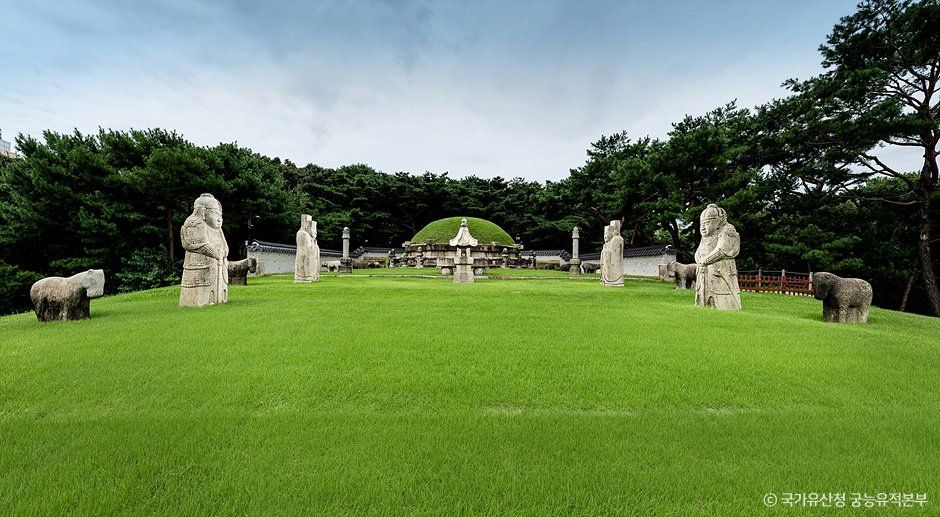
Seonjeongneung is a Joseon royal tomb site in Gangnam-gu, Seoul; the name refers together to Seolleung, the tomb of King Seongjong and Queen Jeonghyeon, and Jeongneung, the tomb of King Jungjong. According to the Korea Tourism Organization, admission is ₩1,000 for adults and foreigners and ₩500 for local residents, and free for those aged 24 and under and 65 and over. It is open from 6 a.m. to 9 p.m., with last entry at 8 p.m., and closed every Monday. The commentary first points out that it is a family burial ground where King Seongjong, his queen and their son King Jungjong rest, then tells of the painful memory of Seolleung being robbed during the Imjin War and of Jungjong lying alone at Jeongneung. Parking and toilets are available, and inquiries are handled at +82-2-568-1291.
- Location: 1 Seolleung-ro 100-gil, Gangnam-gu, Seoul
- Admission: Adults and foreigners ₩1,000, local residents ₩500
- Free admission: Youth aged 24 and under, aged 65 and over, people with disabilities, national merit recipients
- Hours: 6:00–21:00, last entry 20:00
- Closed: Every Monday
- Parking: Available
- Inquiries: +82-2-568-1291
What is Seonjeongneung?
According to the Korea Tourism Organization, Seolleung is the tomb of Seongjong, the 9th king of Joseon, and his third queen, Queen Jeonghyeon. It takes the form of separate mounds on different hills sharing one T-shaped shrine (jeongjagak); seen from in front of the shrine, the left hill is Seongjong's tomb and the right hill is Queen Jeonghyeon's. When Seongjong died in 1494, the tomb was built here the following year, 1495, and the tomb of Grand Prince Gwangpyeong that had been here was moved to what is now Suseo-dong, Gangnam-gu.
Jeongneung is the tomb of Jungjong, the 11th king. After Jungjong died, his tomb was first built elsewhere, but in 1562 his third queen, Queen Munjeong, moved it to its present site. The commentary notes that Seonjeongneung, in the middle of Gangnam in Seoul, is also called Samneung Park ("three tombs park") because it has three tombs: King Seongjong and his queen, and their son King Jungjong.
| Tomb | Buried here | Notes (Korea Tourism Organization information) |
|---|---|---|
| Seolleung (Seongjong) | Seongjong, 9th king | Died in 1494; tomb built the following year |
| Seolleung (Queen Jeonghyeon) | Queen Jeonghyeon of the Yun clan | Died in 1530; tomb built on the east hill |
| Jeongneung | Jungjong, 11th king | Moved to the present site in 1562 |
What stories does Seolleung hold?
The commentary introduces Seongjong as a king who promulgated the Gyeongguk Daejeon, published many books and established the Hongmungwan, the equivalent of King Sejong's Jiphyeonjeon, leading cultural development. It goes on to explain that the Gyeongguk Daejeon was a legal code that brought together laws, royal edicts, ordinances and customs to set out the framework for governing the country.
The heaviest part is the Imjin War. According to the commentary, in 1592 Japanese invaders burned the jeongjagak shrine used for rites, dug up Seongjong's tomb and stole his remains. King Seonjo tried hard to find the body but never did, so the ashes of the clothes that had been buried with him were placed in a new coffin and buried, and Seongjong's tomb is still an empty tomb today. The commentary also mentions that the red-spiked gate and the shrine burned under King Injo. It adds that Queen Jeonghyeon became queen after the deposed Queen Yun, mother of Yeonsangun, and that her son was Jungjong.
Why is Jungjong said to lie alone at Jeongneung?
The commentary introduces Jungjong as the 11th king, who came to the throne through a coup. He became king at eighteen through the Jungjong Restoration, launched by officials to stop Yeonsangun's tyranny. One reading holds that the unusually tall civil and military official statues above the burial mound show the power of strong officials, in contrast to the weak royal authority.
Although Jungjong had three queens, he was buried here alone. According to the commentary, his first queen, Queen Dangyeong, was deposed and could not be buried with him; he was buried with his second queen, Queen Janggyeong, at Huireung, but Queen Munjeong, after consulting the abbot of Bongeunsa Temple, moved him to the present Jeongneung. Jeongneung was low-lying and often flooded in rain, and Queen Munjeong was ultimately buried at Taereung. Korea Tourism Organization information also states that the tombs of Jungjong and his three queens are all scattered. During the Imjin War, Jeongneung was also dug up, and a second funeral was held in 1593.
Other royal spaces continue in our Jongmyo guide and Changdeokgung guide, and the rest of Seoul in our Seoul guide.
Check before you visit Seonjeongneung
- It is closed on Mondays, so check the day of your visit.
- Plan your arrival around the 20:00 last entry.
- If you qualify for free entry (aged 24 and under, 65 and over), ask on site whether ID is needed.
- Ask about the visiting order and whether the trails are open at +82-2-568-1291.
What kind of trip is Seonjeongneung good for?
Good for:
- A break in the city: a tomb area of forest paths close to a subway station.
- History stories: the commentary covers father and son Seongjong and Jungjong and the deposed Queen Yun.
- World Heritage visits: for those looking for a Joseon royal tomb in central Seoul.
- A budget visit: admission is ₩1,000, and free for those aged 24 and under.
Frequently asked questions
How much is admission to Seonjeongneung?
Adults and foreigners ₩1,000, local residents ₩500. Youth aged 24 and under, those aged 65 and over, people with disabilities and national merit recipients are free.
When is Seonjeongneung closed?
Every Monday.
What are the opening hours?
6:00 to 21:00, with last entry at 20:00.
Are King Seongjong's remains at Seolleung?
The commentary says the tomb was robbed during the Imjin War, the remains were never found, and it is now an empty tomb.
Sources
- Korean-language tourist information (overview of Seolleung and Jeongneung, visitor information, admission) · Korea Tourism Organization TourAPI · accessed 2026-10-23
- Tourism storytelling commentary (the disgrace of Seolleung, King Seongjong, King Jungjong at Jeongneung) · Korea Tourism Organization storytelling database · accessed 2026-10-23
Information was checked against the official sources listed above. Opening hours, fees and fares can change; please confirm with the venue or operator before you visit.