
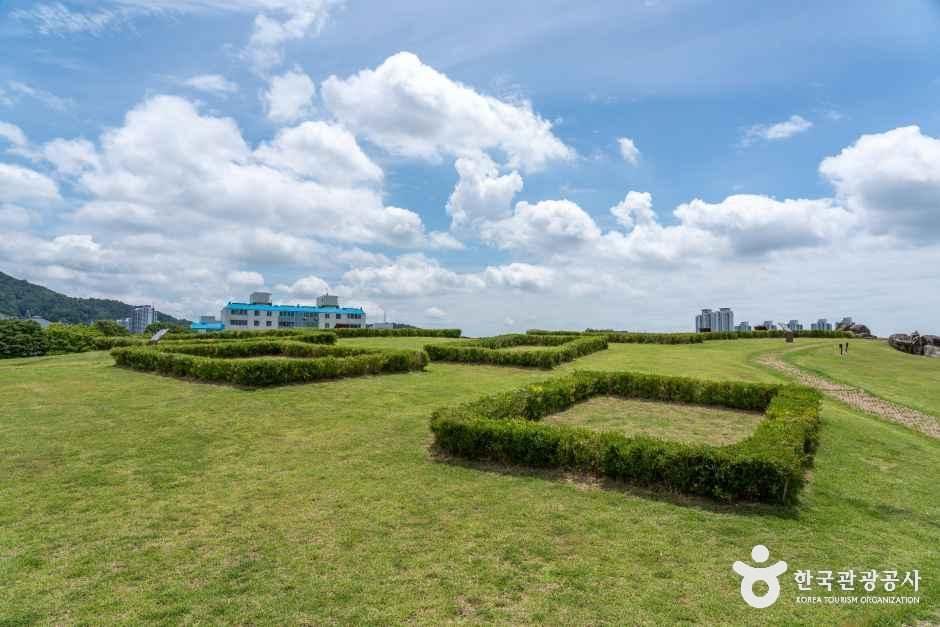
The Ancient Tombs in Daeseong-dong, Gimhae in Gimhae are where the kings and ruling class of Geumgwan Gaya were buried. They lie between Gujibong, the peak of the Gaya founding myth, and the Hoehyeon-ri shell mound, with the Tomb of King Suro to the east. The Korea Tourism Organization says excavation since 1990 has confirmed 37 tombs, including two royal-class tombs of the late 4th to early 5th century. Admission is free, it is always open every day of the year, and parking is available. Inquiries go to the World Heritage team at the Ancient Tombs in Daeseong-dong, Gimhae Museum, +82-55-350-0426. The commentary follows the museum displays: wooden-chamber tombs and retainer burial, iron and trade, and the competing views on why tombs 29 and 39 overlap.
- Location: 126 Gaya-ui-gil, Gimhae, Gyeongsangnam-do
- Admission: Free
- Hours: Always open, all year
- Parking: Available
- Excavation: 37 tombs confirmed; more than 200 wooden-chamber tombs in total
- Inquiries: Ancient Tombs in Daeseong-dong, Gimhae Museum World Heritage team +82-55-350-0426
- Museum hours: Check on site
What are the Ancient Tombs in Daeseong-dong, Gimhae?
Excavation began after part of a structure was exposed while a field was being ploughed. Digs by the Kyungsung University Museum from 1990 uncovered 37 tombs, including two royal-class tombs of the late 4th to early 5th century and many royal and elite tombs from the late 3rd to early 5th century. Kings and the ruling class were buried on the favoured ridge and lower-status commoners on the slopes; wooden-chamber tombs, more than 200 of them, dominate. Since inquiries go to the museum, seeing it alongside the museum displays is the basic plan; museum hours and fees are not in the Korea Tourism Organization data, so check on site. For the myth, see Gujibong; for the founder's tomb, the Tomb of King Suro.
| Item | Details (Korea Tourism Organization data) |
|---|---|
| Excavation began | 1990, Kyungsung University Museum |
| Tombs confirmed | 37 |
| Royal-class tombs | 2, late 4th to early 5th century |
| Wooden-chamber tombs | More than 200, the main type |
| Setting | Between Gujibong and the Hoehyeon-ri shell mound, with the Tomb of King Suro to the east |
Wooden-chamber tombs and retainer burial
The commentary describes wooden-chamber tombs as wide pits lined with a timber chamber holding the body and many grave goods; large ones needed the labour of many people and belonged to kings, queens and nobles. The display includes a full-size reconstruction of Daeseong-dong Tomb 1, and duck-shaped pottery reflects the belief that birds carried the soul to the afterlife.
It also covers retainer burial, the custom of burying people and animals with a king or the highest elite. One interpretation is that kings were seen as heavenly beings to be served even in death; another is that slaves were sometimes buried to display power. The commentary admits this may seem horrifying today and notes the custom existed in many parts of the world; these are the commentary's interpretations and should be read alongside scholarly views.
Why was Geumgwan Gaya called a kingdom of iron?
The commentary credits abundant iron, advanced iron-making and Gimhae's role as a trading port. From the 2nd century Gaya produced much iron around Gimhae for weapons, farm tools and horse gear, and from the 3rd century exported it to Nangnang and Japan. A model ship recreates Wa merchants loading iron. The commentary claims Gaya's ironworking was 500 years ahead of Japan's; that is its own claim, not established fact.
It points to war with Goguryeo in the late 4th to early 5th century as the turning point: Geumgwan Gaya joined Baekje to attack Silla, Goguryeo intervened, and its power declined. Tombs 29 and 39 in the open-air exhibition hall overlap; one view is that northern migrants deliberately destroyed the earlier tomb, and the commentary presents the opposing view too. Compare Daegaya in the Goryeong guide.
- The tombs are always open, but check the museum hours separately.
- Respect restricted-access signs in excavated areas.
- Plan your order with Gujibong and the Tomb of King Suro.
- For inquiries, call +82-55-350-0426.
Who is it for?
- Gaya history: wooden-chamber tombs, retainer burial and iron artefacts.
- A free stop: no admission, always open.
- Myth and remains together: on one route with Gujibong and the Tomb of King Suro.
- Museum fans: reconstructions and dioramas with commentary.
See the Gimhae guide for the area.
FAQ
How much is admission?
Free, always open and open every day, according to the Korea Tourism Organization.
Is there parking?
Yes, parking is available.
How many tombs have been found?
Excavation since 1990 has confirmed 37 tombs, and the cemetery has more than 200 wooden-chamber tombs in total.
What are the museum hours?
They are not in the Korea Tourism Organization data, so check on site or call +82-55-350-0426.
Sources
- Korean-language tourist information (Gimhae Ancient Tombs in Daeseong-dong, Gimhae overview, visitor information) · Korea Tourism Organization TourAPI · accessed 2026-10-23
- Tourism storytelling commentary (Wooden-chamber tombs, retainer burial, iron and trade, tombs 29 and 39) · Korea Tourism Organization storytelling database · accessed 2026-10-23
Fees, hours and programmes can change, so check the latest information before you visit.
Information was checked against the official sources listed above. Opening hours, fees and fares can change; please confirm with the venue or operator before you visit.