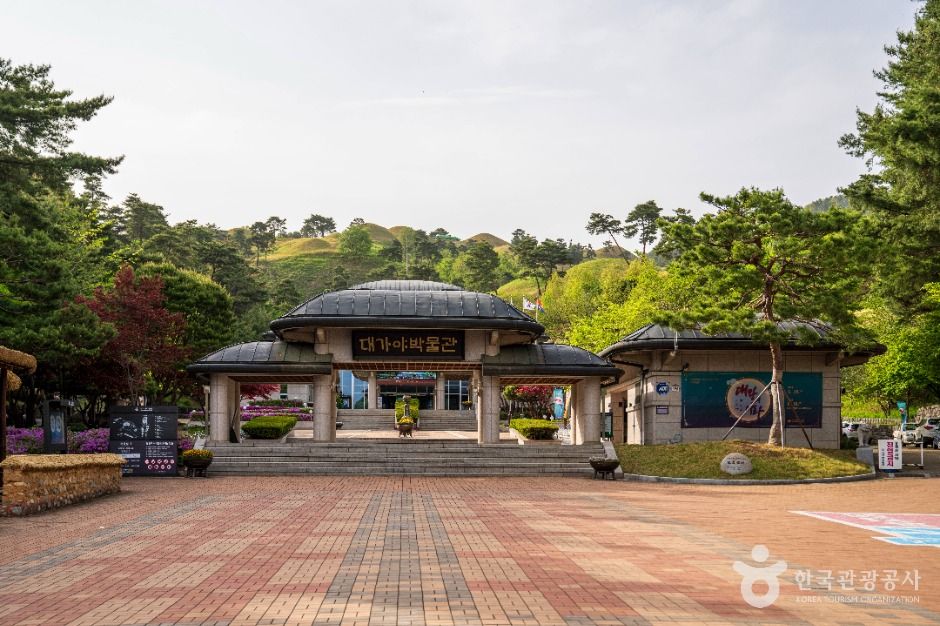
Goryeong is where you understand Daegaya by combining three places: the Jisan-dong Tombs, the Daegaya Museum and the Ureuk Museum. According to the Korea Tourism Organization, all three are free, and the Jisan-dong Tombs are always open with no closing days. The Daegaya Museum and the Ureuk Museum are closed every Monday, and their hours vary by season. At the Jisan-dong Tombs, some 700 tombs run along the ridges; the museum stands at the foot of the tombs, and the Ureuk Museum is in Jeongjeonggol, the home of the gayageum. The commentary tells the 520-year history of Daegaya through its tombs, artifacts and gayageum music. The three are close in straight-line distance, so you can see them in one day.
- Jisan-dong Tombs: Free, always open, free parking
- Daegaya Museum: Free, closed on Mondays
- Ureuk Museum: Free, closed on Mondays
- History of Daegaya: Commentary from the founding myth to the fall in 562
What is there to see in Goryeong?
The Korea Tourism Organization says Goryeong was the center of the Daegaya kingdom. Tombs line the mountain ridges that surround Daegaya-eup like a folding screen, and they are believed to be the tombs of the Daegaya ruling class from the 4th to the 6th centuries. The commentary notes that because Daegaya left no written record of its own history, it was long overlooked in ancient history.
Continue with the tombs in the Jisan-dong Tombs guide (in Korean), the artifacts in the Daegaya Museum guide (in Korean) and the story of the gayageum in the Ureuk Museum guide (in Korean).
How do the hours and fees of the three places differ?
The times in the table are based on Korea Tourism Organization tourist information. The months that divide the summer and winter seasons differ by facility, so check before you go.
| Site | Fee | Hours | Closed |
|---|---|---|---|
| Jisan-dong Tombs | Free | Always open | Open all year |
| Daegaya Museum exhibition halls | Free | Summer 9:00–18:00, winter 9:00–17:00 | Mondays (if a public holiday, the next weekday) |
| Ureuk Museum | Free | March–October 9:00–18:00, November–February 9:00–17:00 | Mondays, January 1, and Seollal and Chuseok days |
Check before you plan your Goryeong day
- Both museums may be closed on Mondays, so choose your day carefully.
- The trails through the tombs go uphill, so wear suitable shoes.
- Parking at the Jisan-dong Tombs is listed as free.
- Plan the order of your visits around the museums' last-entry times.
Museum entry ends 30 minutes to 1 hour before closing. If a Monday is a public holiday, the Daegaya Museum closes on the first weekday after the holiday instead, while the Ureuk Museum opens as usual. The rules differ between the two, so check each one for a Monday visit.
How close are the three places?
Calculated from the coordinates in Korea Tourism Organization tourist information, the straight-line distances are about 0.5 km from the Jisan-dong Tombs to the Daegaya Museum, about 2.2 km from the Daegaya Museum to the Ureuk Museum, and about 2.0 km from the Jisan-dong Tombs to the Ureuk Museum. Actual road distances and walking times are not in the Korea Tourism Organization data, so we could not check them. The commentary says the mountain above the museum is where the tombs begin, and the Ureuk Museum commentary says it takes about 15 minutes on foot to reach the Ureuk Memorial Tower on the hill behind the museum.
The route in the commentary shows that the tombs and the museum can be linked on foot: it says the trail starts on the slope next to the Royal Tomb Exhibition Hall. It is safer to treat the Ureuk Museum as a distance to cover by car or public transport.
| Route | Straight-line distance (from coordinates) |
|---|---|
| Jisan-dong Tombs to Daegaya Museum | About 0.5 km |
| Daegaya Museum to Ureuk Museum | About 2.2 km |
| Jisan-dong Tombs to Ureuk Museum | About 2.0 km |
What kind of kingdom was Daegaya?
The commentary says Goryeong is a basin surrounded by Gayasan Mountain and its ridges, and that farming culture flourished here from the Bronze Age. When King Gwanggaeto of Goguryeo invaded Gaya in 400, inland Banpaguk was not badly damaged, and afterward it absorbed the small states around it and was reborn as Daegaya. Using the iron resources of Yaro in Hapcheon, it produced iron goods and weapons in large quantities and was called the iron kingdom.
According to the commentary, its fall was hastened when a marriage alliance with Silla broke down as Daegaya stood between Baekje and Silla, and it fell in 562. The commentary starts from the point that Daegaya left no written records and was long overlooked, so its tombs and artifacts are the core material of a trip here. This explanation is the commentary's interpretation, so read it alongside academic views.
What else is there nearby?
The Daegaya Museum's information introduces Daegaya Village, where you can glimpse the life of the Daegaya people; the Daegaya Theme Park, with exhibitions on Daegaya by theme; Ballyongsa Temple; Gaesil Village, home of the head family of Jeompiljae Kim Jong-jik; and the Janggi-ri Petroglyphs, now arranged as a petroglyph park. Fees and hours for these facilities are not in the Korea Tourism Organization data, so check on site.
Talking about Goryeong after Daegaya, the commentary notes that the multi-story stone pagoda of Ballyongsa Temple is displayed inside the museum. The other center of Gaya continues in our Gimhae guide.
What kind of trip is Goryeong good for?
Good for:
- Gaya history trips: the commentary runs from the founding myth to the fall.
- A free day out: none of the three charges a fee.
- Music lovers: meet the story of Ureuk and the gayageum at the museum.
Goryeong FAQ
Do the Daegaya sites in Goryeong charge admission?
According to Korea Tourism Organization information, the Jisan-dong Tombs, the Daegaya Museum and the Ureuk Museum are all free.
Can I visit on a Monday?
The Jisan-dong Tombs are always open, but the Daegaya Museum and the Ureuk Museum are closed on Mondays.
Is there parking at the tombs?
Yes, parking is available and listed as free.
When did Daegaya fall?
The commentary says Silla forces destroyed Daegaya in 562.
Sources
- Korean-language tourist information (Jisan-dong Tombs, Daegaya Museum, Ureuk Museum) · Korea Tourism Organization TourAPI · accessed 2026-10-23
- Tourism storytelling commentary (Daegaya tombs and artifacts, Ureuk and the gayageum) · Korea Tourism Organization storytelling database · accessed 2026-10-23
Information was checked against the official sources listed above. Opening hours, fees and fares can change; please confirm with the venue or operator before you visit.