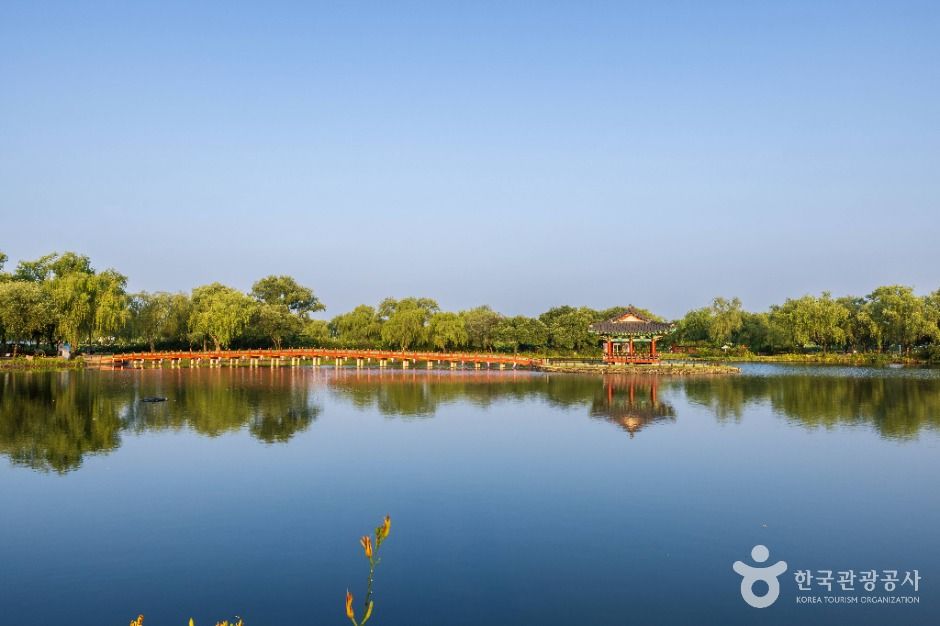
Buyeo is Sabi, the capital to which Baekje moved from Ungjin in 538 under King Seong and which it kept until its fall. Busosanseong Fortress, Jeongnimsa Temple Site and Gungnamji Pond can all be seen within the old capital area. Busosanseong costs ₩2,000 for adults, while Jeongnimsa Temple Site and Gungnamji Pond are free. Jeongnimsa Temple Site is about 650 m in a straight line from Busosanseong, and Gungnamji Pond is about 1.1 km south of Jeongnimsa Temple Site. All three are within walking distance of each other, and Busosanseong is the only one that charges admission. Busosanseong closes at 17:00 in winter, and the Jeongnimsa Temple Site Museum and the Buyeo National Museum are closed on Mondays. The Baekje Cultural Festival is held every autumn.
- Busosanseong Fortress: Adults ₩2,000, 9:00–18:00 (17:00 from November to February)
- Jeongnimsa Temple Site: Free, the pagoda is always open
- Gungnamji Pond: Free, always open
- Buyeo National Museum: Free, closed on Mondays
- Events: Seodong Lotus Festival in July, Baekje Cultural Festival in autumn
What place does Buyeo hold in Baekje history?
According to the Korea Tourism Organization, Busosanseong Fortress, the Gwanbuk-ri archaeological site and the five-story stone pagoda at Jeongnimsa Temple Site are all part of the Baekje Historic Areas, a UNESCO World Heritage site. The storytelling commentary explains that King Seong moved the capital to Sabi as a long-planned national project, and that Sabi was an innovative new city for its time, built with urban planning and advance development. The Sabi period is described as lasting 123 years.
That is why the whole of Buyeo tells one story. The mountain fortress built to protect the palace, the main temple in the middle of the capital and the pond beside the detached palace sit close together. If you first see the Ungjin period in our Gongju guide, the reasons for the move make more sense.
What should I see in Buyeo, and what does it cost?
The figures below are based on Korea Tourism Organization tourist information; check dates and times again before you go.
| Place | Admission | Hours and closing days |
|---|---|---|
| Busosanseong Fortress | Adults ₩2,000, youth ₩1,100, children ₩1,000 | March–October 9:00–18:00, November–February 9:00–17:00, open all year |
| Five-story stone pagoda at Jeongnimsa Temple Site | Free | The pagoda is always open; the museum is closed on Mondays |
| Gungnamji Pond | Free | Always open, all year |
| Buyeo National Museum | Free | 9:00–18:00 (entry until 17:30); closed every Monday, January 1, and on Seollal and Chuseok days |
Our Busosanseong guide (in Korean) shows the walking route to Samchungsa Shrine, Nakhwaam Rock and Goransa Temple. The pagoda at Jeongnimsa Temple Site and the inscription by Su Dingfang are covered in the Jeongnimsa Temple Site guide (in Korean), and the pond and the legend of Seodong in the Gungnamji Pond guide (in Korean). If you would rather see reconstructions of Sabi Palace and Neungsa Temple based on historical research than the ruins themselves, there is a separate Baekje Cultural Land guide (in Korean); individual adult admission is ₩6,000.
Is the Buyeo National Museum worth a separate visit?
The Buyeo National Museum stands at the foot of Geumseongsan Mountain in the southeast of central Buyeo; it moved to its current site and opened in 1993. According to the Korea Tourism Organization, it displays around 1,000 artifacts in 4 galleries and an outdoor exhibition area, divided into the Prehistory Gallery, History Gallery, Buddhist Art Gallery and outdoor exhibits. It is open 9:00–18:00, with entry until 17:30.
It is closed every Monday, on January 1, and on Seollal and Chuseok days, so if you visit on a Monday, focus on Busosanseong and Gungnamji Pond and save the museum for another day. The Jeongnimsa Temple Site Museum is also closed on Mondays.
Check before you plan your Buyeo day
- On Mondays the Buyeo National Museum and the Jeongnimsa Temple Site Museum are closed, so focus on outdoor sites.
- Busosanseong closes at 17:00 in winter, so go there first.
- Check the dates of the Seodong Lotus Festival in July and the Baekje Cultural Festival in autumn before you go.
- Gungnamji Pond is free and always open, so leave it until last.
How should I plan a one-day route?
Measured in a straight line between their coordinates, Jeongnimsa Temple Site is about 650 m from Busosanseong and about 1.1 km from Gungnamji Pond. So it makes sense to see Jeongnimsa Temple Site, in the middle, in the morning, spend close to half a day walking the mountain paths of Busosanseong, and come down to Gungnamji Pond before sunset. If you want to include the Buyeo National Museum, avoid Mondays.
Transport details are not in the Korea Tourism Organization data, so check train and bus times in the timetables. For on-site inquiries, call the Chungnam Tourist Information Center at +82-41-830-2880.
What kind of trip is Buyeo good for?
Good for:
- First-time visitors: the three sites are close, so you can see them in one day.
- Combining with Gongju: you can follow the story of the move from Ungjin to Sabi.
- Summer visits: the Seodong Lotus Festival is held at Gungnamji Pond in July.
- Autumn visits: the Baekje Cultural Festival is held every autumn.
Buyeo FAQ
Which places in Buyeo charge admission?
According to the official information, Busosanseong charges ₩2,000 for adults. Jeongnimsa Temple Site, Gungnamji Pond and the Buyeo National Museum are free.
Can I see the Buyeo sites in one day?
Jeongnimsa Temple Site is about 650 m in a straight line from Busosanseong and about 1.1 km from Gungnamji Pond, so you can see them all in one day.
Can I visit on a Monday?
Busosanseong, Gungnamji Pond and the pagoda at Jeongnimsa Temple Site are open. The Buyeo National Museum and the Jeongnimsa Temple Site Museum are closed on Mondays.
Where can I get tourist information for Buyeo?
Call the Chungnam Tourist Information Center at +82-41-830-2880.
Sources
- Korean-language tourist information (Gwanbuk-ri Site and Busosanseong, Jeongnimsa Temple Site, Seodong Park and Gungnamji Pond, Buyeo National Museum) · Korea Tourism Organization TourAPI · accessed 2026-10-23
- Tourism storytelling audio guide commentary (Busosanseong, Jeongnimsa Temple Site, Gungnamji Pond) · Korea Tourism Organization storytelling database · accessed 2026-10-23
Information was checked against the official sources listed above. Opening hours, fees and fares can change; please confirm with the venue or operator before you visit.