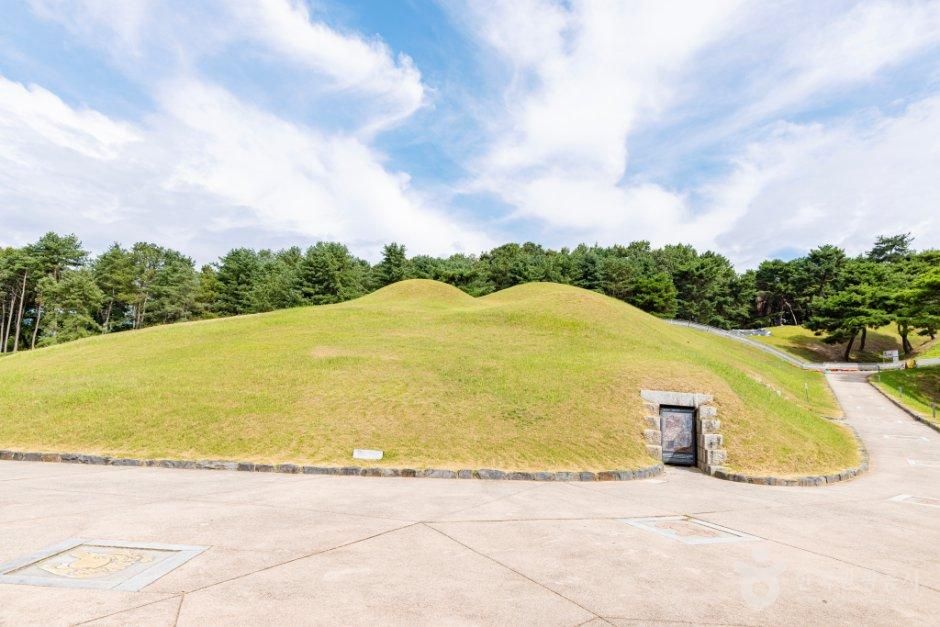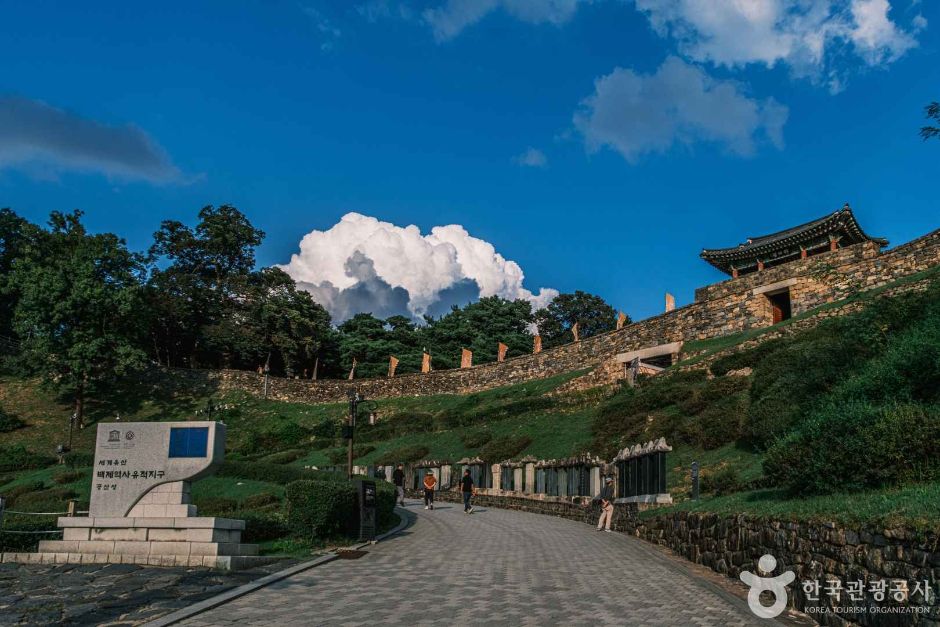
Gongju is where Baekje, having lost Hanseong, moved and spent 63 years at its capital Ungjin, so it is a day-trip destination where you can see a fortress and royal tombs in one area. Gongsanseong Fortress costs ₩3,000 for adults, as do the Tomb of King Muryeong and the Royal Tombs, and the two are about 1.1 km apart in a straight line. From the top of Geumseoru Gate at Gongsanseong you can make out the direction of the Tomb of King Muryeong in the distance, and at the tomb you hear the stories of artifacts such as the epitaph stones, the tomb guardian beast, gilt-bronze shoes and a bronze iron. The Gongju National Museum is free and closed on Mondays, so check the day of the week first. Gongsanseong and the Tomb of King Muryeong each have their own admission fees, so add the two together: for two adults visiting both, admission comes to ₩12,000.
- Gongsanseong Fortress: Adults ₩3,000, 9:00–18:00 (17:00 from November to February)
- Tomb of King Muryeong and Royal Tombs: Adults ₩3,000, free on the last Wednesday of each month
- Gongju National Museum: Free, closed on Mondays
- Jeongjisan site: Free, always open
- Distance between the two sites: About 1.1 km in a straight line from Gongsanseong to the Tomb of King Muryeong
Why is Gongju a Baekje destination?
The Korea Tourism Organization introduces Gongsanseong as the royal fortress that protected Ungjin-period Baekje from 475 to 538, and the Tomb of King Muryeong and the Royal Tombs as the place where the kings of the same period were buried. Both are part of the Baekje Historic Areas, a UNESCO World Heritage site. The storytelling commentary counts this period as 63 years and five kings, from the arrival of King Munju until King Seong moved the capital again to Sabi.
The Ungjin period was not smooth. Conflict between the established Hanseong aristocracy and the local powers of Ungjin made politics unstable, and the commentary says some kings were even killed by aristocrats along the way. The king who calmed this turmoil by appointing old and new aristocrats evenly was King Muryeong. So in Gongju you hear one story in two places: Gongsanseong holds the traces of the capital where the kings lived and fought, and the Tomb of King Muryeong is where the king who settled the turmoil was buried.
What should I see in Gongju, and in what order?
Each site works differently, so comparing them in a table first makes planning easier. The figures below are based on Korea Tourism Organization tourist information.
| Place | Admission | Hours and closing days |
|---|---|---|
| Gongsanseong Fortress | Adults ₩3,000 | March–October 9:00–18:00, November–February 9:00–17:00; closed January 1 and on Seollal and Chuseok days |
| Tomb of King Muryeong and Royal Tombs | Adults ₩3,000 | March–October 9:00–18:00 (entry until 17:30), November–February 9:00–17:00 (entry until 16:30) |
| Gongju National Museum | Free (special exhibitions may charge) | 9:00–18:00; closed every Monday, January 1, and on Seollal and Chuseok days |
| Jeongjisan site | Free | Always open, all year |
The reason to start with Gongsanseong is the order of the story. Look down over Gongju from Geumseoru Gate and locate the directions of the Tomb of King Muryeong and the Jeongjisan site; then, when you see the real tombs and the replica at the Tomb of King Muryeong, the geography connects in your head. Guided commentary at the Tomb of King Muryeong runs every hour on the hour from 9:00 to 16:00, so time your afternoon around it. See the Gongsanseong guide (in Korean) and the Tomb of King Muryeong and Royal Tombs guide (in Korean) for details.
Are the Gongju National Museum and the Jeongjisan site worth seeing?
The Gongju National Museum opened on April 1, 1946, and has galleries on Ungjin-period Baekje and on the history and culture of Chungcheongnam-do. Admission is free; only some special exhibitions charge. It is open 9:00–18:00 and closed every Monday, on January 1, and on Seollal and Chuseok days. Parking is available for 96 cars and 21 buses.
The Jeongjisan site is a Baekje royal ritual site designated a Historic Site on November 6, 2006. It is close to the Songsan-ri tombs with a view of Gongsanseong, and the storytelling commentary describes it as the place where a mortuary was set up for King Muryeong and his queen before they were laid in the tomb. There is no admission fee and it is open all year, so it is a good stop when other times don't work.
Check before you plan your Gongju day
- Commentary at the Tomb of King Muryeong is on the hour between 9:00 and 16:00, so arrive just before the hour.
- The Gongju National Museum is closed on Mondays, so on a Monday focus on Gongsanseong and the Tomb of King Muryeong.
- Remember that entry to Gongsanseong ends 30 minutes before closing, and to the Tomb of King Muryeong at 17:30 or 16:30.
- Days are short from November to February, so walk Gongsanseong first.
What kind of trip is Gongju good for?
Good for:
- First encounters with Baekje: the fortress, the royal tombs and the museum are close together, so the flow of the era connects in one day.
- Traveling with children: the Tomb of King Muryeong has commentary on the hour, and the Gongju National Museum is free.
- Combining with Buyeo: you can continue to Busosanseong and Jeongnimsa Temple Site in Buyeo, part of the same Baekje Historic Areas. Buyeo guide
Gongju FAQ
Can I see Gongsanseong and the Tomb of King Muryeong in one day?
The two are about 1.1 km apart in a straight line, which suits a morning at one and an afternoon at the other. As long as you keep to the last-entry times, it can be done in one day.
How much is admission to the Gongju sites?
Gongsanseong and the Tomb of King Muryeong and the Royal Tombs are both ₩3,000 for adults. The Gongju National Museum and the Jeongjisan site are free.
When is the Gongju National Museum closed?
Every Monday, January 1, and on Seollal and Chuseok days.
Where can I get tourist information for Gongju?
Call the Gongju Tourist Information Center at +82-41-856-7700, which is listed as the contact for Gongsanseong and the Jeongjisan site.
Sources
- Korean-language tourist information (Gongsanseong, Tomb of King Muryeong and Royal Tombs, Gongju National Museum, Jeongjisan site) · Korea Tourism Organization TourAPI · accessed 2026-10-23
- Tourism storytelling audio guide commentary (Gongsanseong, Tomb of King Muryeong) · Korea Tourism Organization storytelling database · accessed 2026-10-23
Information was checked against the official sources listed above. Opening hours, fees and fares can change; please confirm with the venue or operator before you visit.