
Gangneung Hyanggyo Confucian School
Confucian school, cultural heritage · Data as of
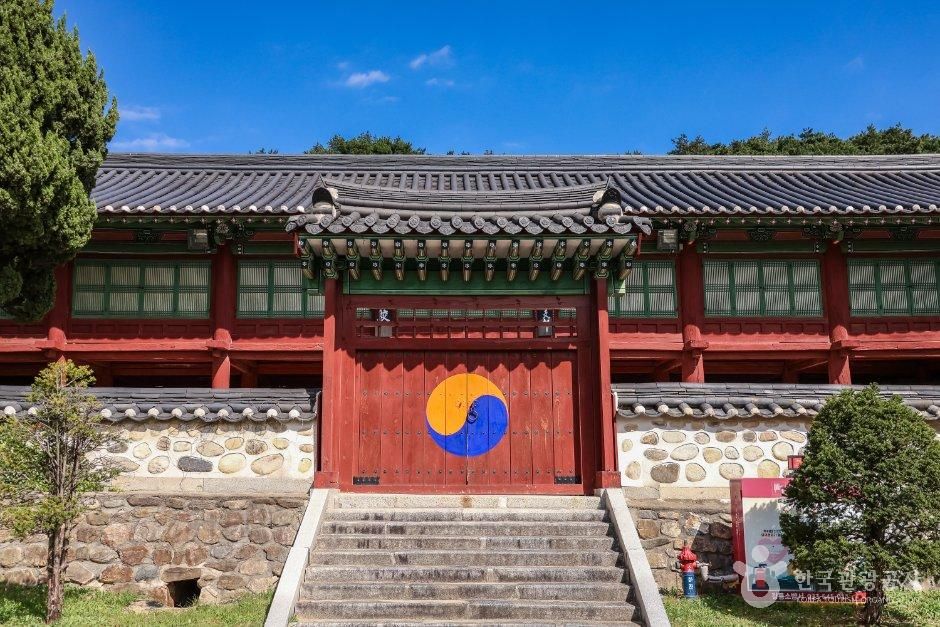
Gangneung Hyanggyo is a Confucian school you can visit free of charge, and its Treasure-listed buildings, Daeseongjeon Shrine, Myeongnyundang Hall and the Dongmu and Seomu shrines, are all in one place. It was first built in 1313, the fifth year of King Chungseon of Goryeo, burned down in 1411 and was rebuilt in 1413. It stands in Gyo-dong in central Gangneung, on a slope below Hwabusan Mountain, and still keeps the "study in front, shrine behind" layout: the ritual area at the top and the study area below. It is open from 9:00 to 17:00, and culture and tourism guides are on duty from 9:00 to 16:00. The seokjeon rites in spring and autumn and the incense offerings on the first and fifteenth days of each lunar month continue to this day.
- Location
- 강원특별자치도 강릉시 명륜로 29 (교동)
- Opening hours
- 9:00 to 17:00
- Guides
- Culture and tourism guides on duty from 9:00 to 16:00
- Closed
- Open all year
- Admission
- Free
- Contact
- +82-33-648-3667
- Restrooms
- Available
Official information page (Korean)
What is Gangneung Hyanggyo?
Short answer: A local school founded in 1313, the fifth year of King Chungseon of Goryeo. Today it is a heritage site where the ancestral rites continue.
A hyanggyo was a state-founded school that honored great Confucian scholars with rites and taught and guided local people. According to the Korea Heritage Service, Gangneung Hyanggyo is the largest of the provincial hyanggyo, excluding Seonggyungwan in Seoul. It sits on sloping ground below Hwabusan Mountain, with Daeseongjeon, the shrine for the rites, at the top and Myeongnyundang, the lecture hall, below.
Its history runs like this: Kim Seung-in, then the jonmusa (royal commissioner) of Gangneung, built it in 1313; it burned down in 1411; and two years later, in 1413, it was rebuilt on the proposal of Yi Maeng-sang, a magistrate of Gangneung Dohobu. Between 1623 and 1649, in the reign of King Injo of Joseon, it was greatly enlarged to reach its present impressive size. The buildings did not burn during the Korean War, so it has come down to us in its old form.
The teaching function has ended and only the ritual function remains. The seokjeon rites in spring and autumn and the incense offerings on the first and fifteenth days of the lunar month continue, and Myeongnyun High School, founded by the hyanggyo, is still in operation. Most of the books it once held burned during the Korean War; only about 70 volumes, including the Gongbuja Seongjeokdo (illustrated life of Confucius), remain today.
What are the opening hours and admission fee?
Short answer: Admission is free, and it is open from 9:00 to 17:00 every day of the year.
| Item | Details |
|---|---|
| Location | 강원특별자치도 강릉시 명륜로 29 (교동) |
| Opening hours | 9:00 to 17:00 |
| Guides | Culture and tourism guides on duty from 9:00 to 16:00 |
| Closed | Open all year |
| Admission | Free |
| Contact | +82-33-648-3667 |
| Restrooms | Available |
Guides are on duty from 9:00 to 16:00, so arrive before 16:00 if you want to hear a commentary; the gates close at 17:00. Daeseongjeon is at the top of the slope, so the natural route is to start at Myeongnyundang below and walk up.
What should I see at Gangneung Hyanggyo?
Short answer: Start at Myeongnyundang at the bottom and walk up to Daeseongjeon at the top, seeing the three Treasure-listed buildings and the Dongmu and Seomu shrines in turn.
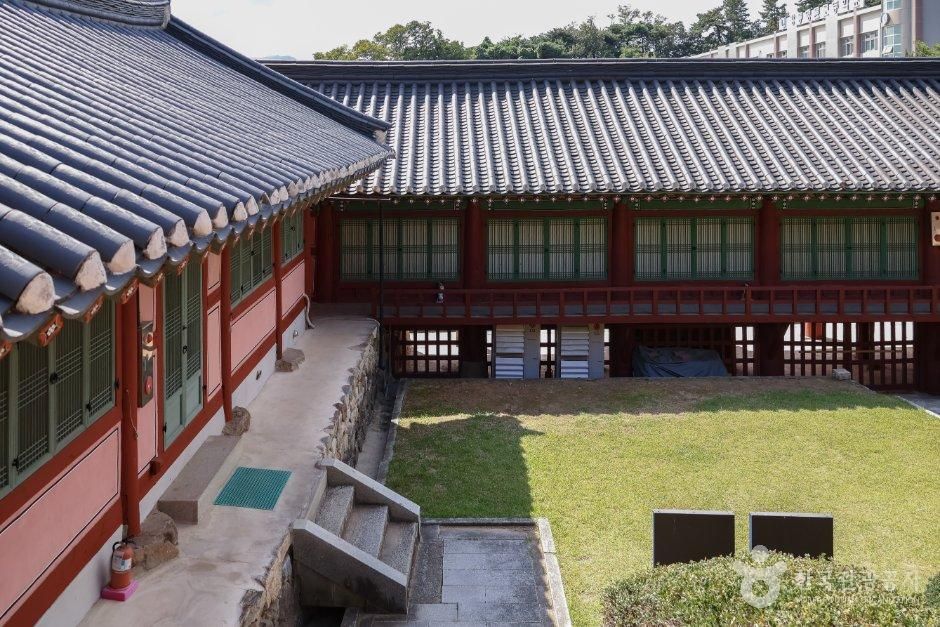
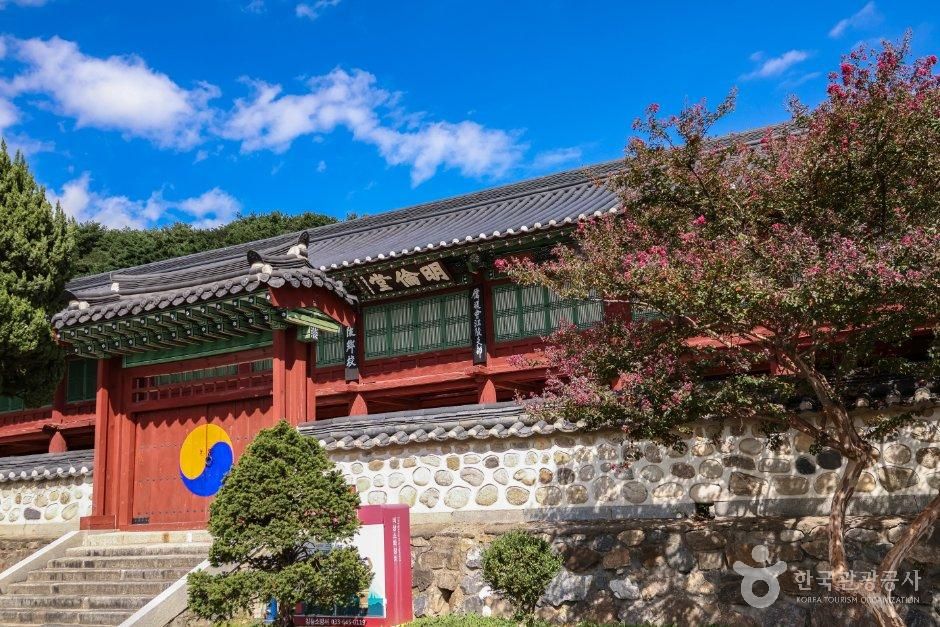
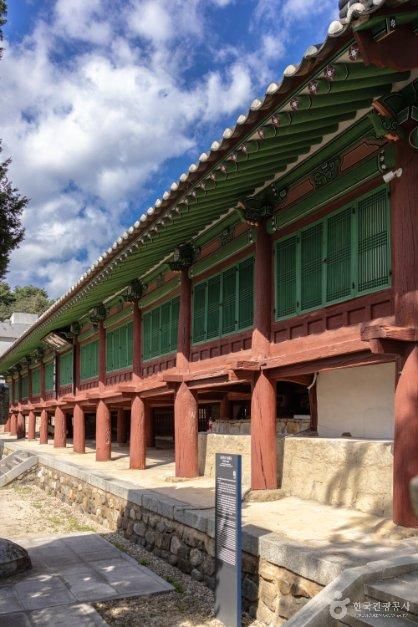
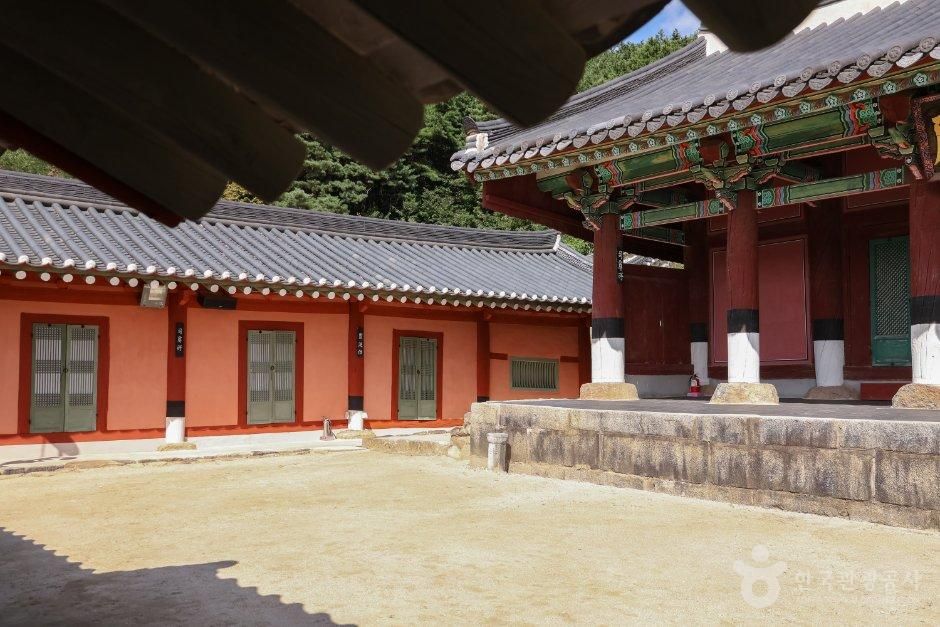
Myeongnyundang is the lecture hall where students gathered to study. It is a two-story pavilion; the ground floor has only pillars and no walls and served as a passageway. In the early Joseon period it was a long pavilion called Namnu, and it has been used as Myeongnyundang since the early 17th century. It is the largest surviving hyanggyo lecture hall in Korea and was designated a Treasure in 2020.
Daeseongjeon, built in 1413, is the main building of the ritual area. Seen from the side, it has a gable roof shaped like the character 人, and its bracket sets sit only on top of the pillars (the jusimpo style). The floor is paved with stone slabs and the ceiling is open, with the roof frame exposed. It enshrines the spirit tablets of Confucius together with Yanzi, Zisi, Zengzi and Mencius, and was designated a Treasure in 1963.
Dongmu and Seomu are the buildings on the left and right of the courtyard in front of Daeseongjeon, and Jeollang is the long corridor building across the front of Daeseongjeon. At other hyanggyo, the tablets of the Chinese and Korean Confucian scholars once kept in such buildings were moved into the main shrine or the buildings were removed, but Gangneung Hyanggyo still keeps them in Dongmu and Seomu in the Joseon manner. Jeollang is thought to show what a hyanggyo looked like before the three-gate entrance became standard, and it has come down with few changes since its repair in 1721. These three buildings were designated Treasures together in 2020.
Beside Myeongnyundang, the Dongjae and Seojae dormitories where students lived and other annex buildings remain, giving a sense of the scholars’ daily life.
What heritage designations does Gangneung Hyanggyo have?
Short answer: Korea Heritage Service records list four designated heritage items at Gangneung Hyanggyo.
| Designated heritage | Category | Designated on |
|---|---|---|
| Daeseongjeon Shrine of Gangneung Hyanggyo | Treasure | January 21, 1963 |
| Myeongnyundang Hall of Gangneung Hyanggyo | Treasure | December 28, 2020 |
| Dongmu, Seomu and Jeollang of Gangneung Hyanggyo | Treasure | December 28, 2020 |
| Gangneung Hyanggyo | Provincial Tangible Cultural Heritage | January 17, 1985 |
Where can I stay near Gangneung Hyanggyo Confucian School?
Short answer: The closest is 더 다온 (hostel), about 4 min walk. These are the 3 closest stays within 1 km.
| Stay | Type | Distance | Getting there |
|---|---|---|---|
| 더 다온 | Hostel | 296 m | About 4 min walk |
| 아가바라펜션 | Pension | 321 m | About 4 min walk |
| 백야 스테이 | Hostel | 333 m | About 4 min walk |
Distances are straight-line distances, so the actual route may be longer; walking times assume 80 m per minute. Select a stay to open its page (in Korean) with check-in times and nearby restaurants and cafés. Property names are shown as officially registered in Korean.
Where can I eat or get coffee near Gangneung Hyanggyo Confucian School?
Short answer: 5 restaurants between 285 m and 339 m, and 5 cafés between 181 m and 280 m, listed from the closest.
| Restaurant | Type | Distance | Getting there |
|---|---|---|---|
| 참치이야기 | Japanese | 285 m | About 4 min walk |
| 취화선 | Outdoor pub | 289 m | About 4 min walk |
| 유경이네 냉삼집 | Korean | 321 m | About 4 min walk |
| 피자알볼로 강릉점 | Western | 323 m | About 4 min walk |
| 이스트 | Café | 339 m | About 4 min walk |
| Café | Type | Signature menu | Distance | Getting there |
|---|---|---|---|---|
| 해미루&명륜과자점 | Café | 에스프레소(HOT), 아메리카노(HOT) | 181 m | About 2 min walk |
| 레드망치 2호점 | Café | 정보 없음 | 213 m | About 3 min walk |
| 블루쉘커피 | Café | 소금 커피, 바다 쿠키 | 244 m | About 3 min walk |
| 수백담 | Dessert café | 약과, 아메리카노 | 276 m | About 3 min walk |
| 에이브릭 | Café | 아이스크림라떼, 아메리카노 | 280 m | About 3 min walk |
Select a name to open its page on our restaurant or café guide (in Korean). The small dots on the map also show nearby places that are not in the tables.
See it on the map
The large purple pin is Gangneung Hyanggyo Confucian School. Tap a pin to see its name and distance.
What else is there to see near Gangneung Hyanggyo Confucian School?
Short answer: The closest is Ogeumjip Thatched House (about 10 min walk), and there are 5 attractions within 4 km.
| Attraction | Type | Distance | Getting there |
|---|---|---|---|
| Ogeumjip Thatched House | Thatched-roof house, cultural heritage | 800 m | About 10 min walk |
| Wolhwa Street | Folktale-themed street | 873 m | About 11 min walk |
| Gangneung Daedohobu Government Office | Historic site, government office ruins | 1.2 km | About 15 min walk |
| Myeongju Art Madang | Arts and culture complex | 1.5 km | About 1.5 km (straight line) |
| Namsan Park | City park | 1.8 km | About 1.8 km (straight line) |
Who is Gangneung Hyanggyo Confucian School good for?
- Anyone who wants to see early Joseon wooden architecture for free
- Those who like to walk while listening to a guide
- Anyone planning a half day around heritage sites in central Gangneung
Check before you go
- On days with ancestral rites, check on site which areas are open
- If you have limited mobility, ask in advance about the path up the slope to Daeseongjeon
Checklist
- Arrive before 16:00 to hear a guide
- Start at Myeongnyundang and walk up to Daeseongjeon
- Look at how the spirit tablets are kept in Dongmu and Seomu
- Pick nearby restaurants and cafés on the map in advance
Photos of Gangneung Hyanggyo Confucian School

Frequently asked questions
How much is admission to Gangneung Hyanggyo?
It is free. Korea Tourism Organization information lists admission as free, with opening hours from 9:00 to 17:00.
Which buildings are designated Treasures?
Daeseongjeon was designated in 1963, and Myeongnyundang and Dongmu, Seomu and Jeollang in 2020. The hyanggyo as a whole was designated Gangwon Provincial Tangible Cultural Heritage in 1985.
When was Gangneung Hyanggyo built?
Kim Seung-in, the jonmusa of Gangneung, built it in 1313, the fifth year of King Chungseon of Goryeo; after a fire in 1411 it was rebuilt in 1413.
When can I hear a guided commentary?
Culture and tourism guides are on duty from 9:00 to 16:00. For inquiries, call +82-33-648-3667.
Where is the closest place to stay near Gangneung Hyanggyo Confucian School?
Hostel 더 다온 is the closest (about 4 min walk). Its page, in Korean, shows the check-in time and nearby restaurants and cafés.
Things to do in Gangneung
This page contains affiliate links; we may earn a commission at no extra cost to you.
Prices and availability are set by each partner and can change at any time.
Sources
- Korea Tourism Organization TourAPI, Korean-language tourist information (attraction details) · Korea Tourism Organization · accessed 2026-10-23 (Korean-language source)
- Korea Heritage Open API (heritage list and details) · Korea Heritage Service · accessed 2026-10-23 (Korean-language source)
- Official information page · Operator · accessed 2026-10-23 (Korean-language source)
Fees, hours and closing days can change. Please check with the site before you visit.